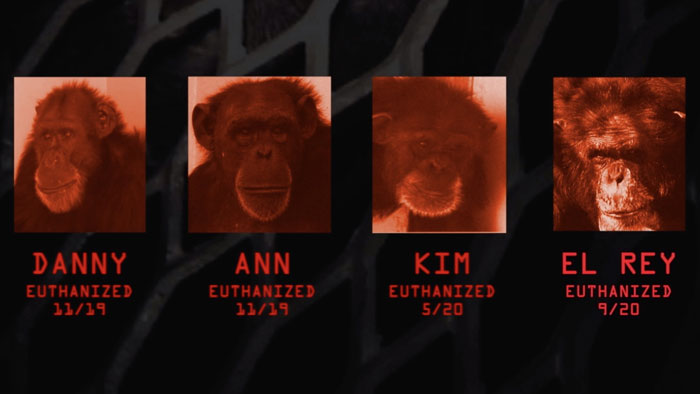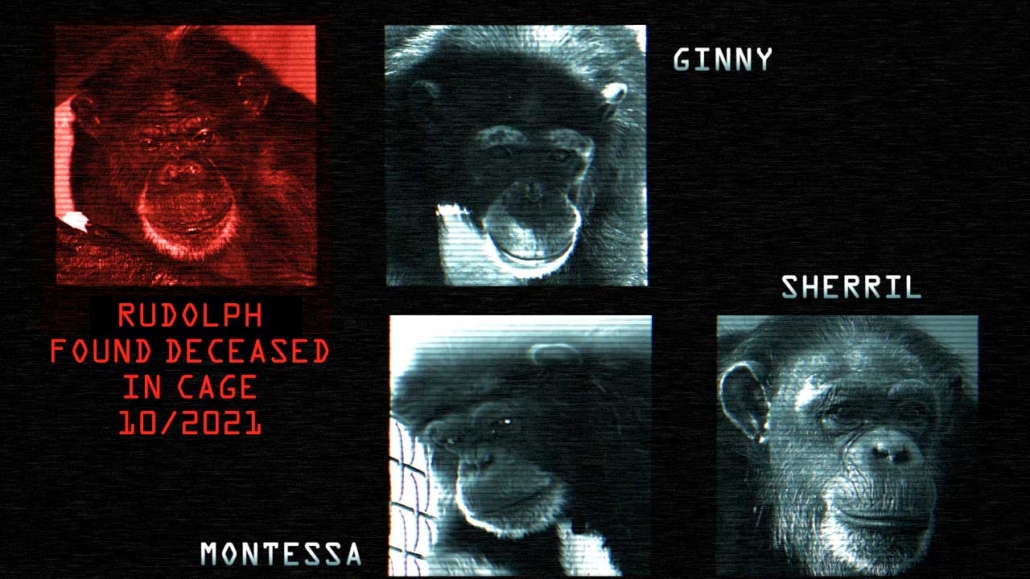

|
A Timeline:
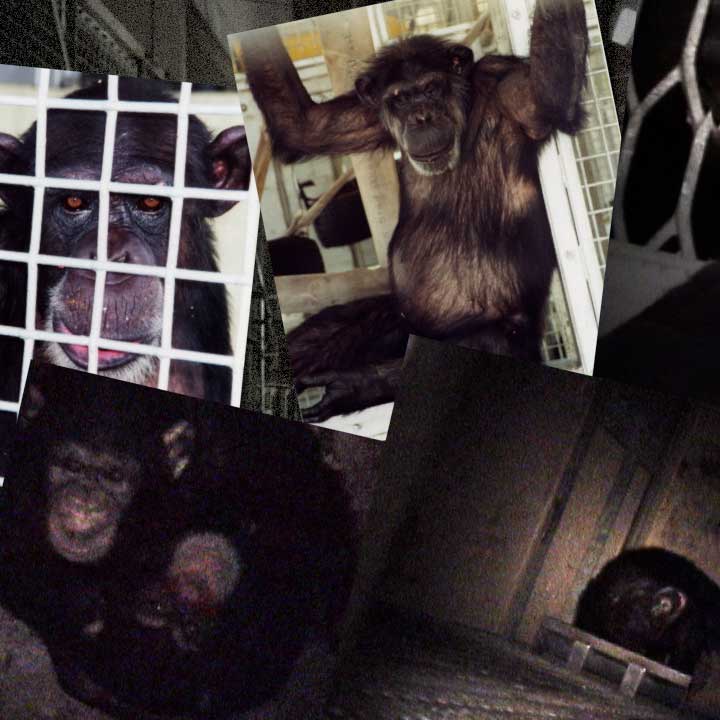
Chimpanzees are our closest genetic relatives. In the wild, chimps live in complex social groups, develop lasting bonds with their families, pass on culture, and exhibit altruism and empathy. Chimpanzees face many threats to their continued survival as a species, including habitat destruction.
The United States is the last nation still using captive chimpanzees in painful, outdated invasive testing. This timeline shows how so many chimpanzees came to be used in invasive research in New Mexico.
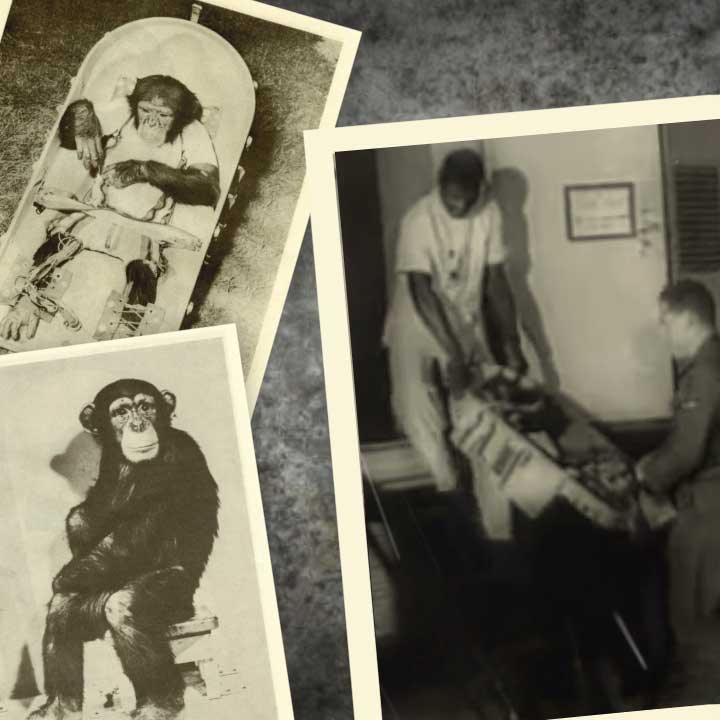
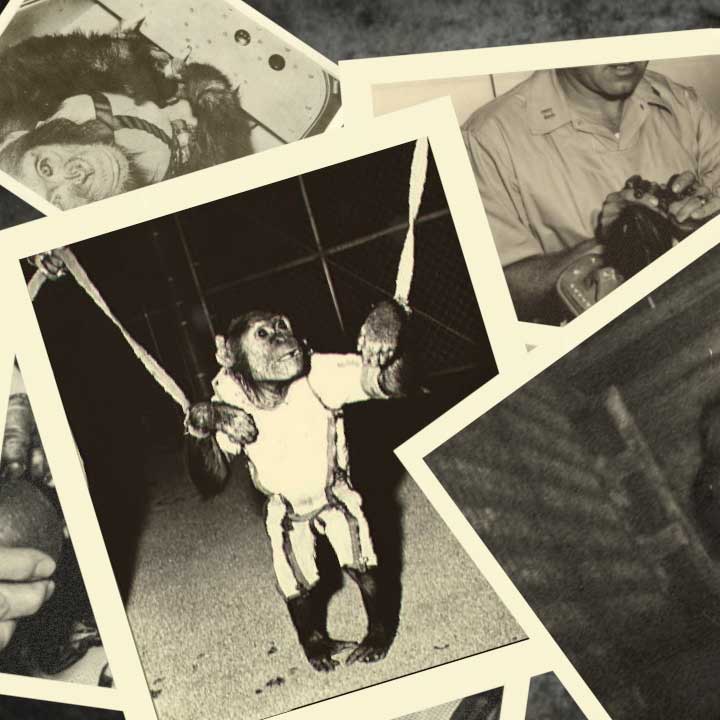
- 1950's: United States Air Force brings 65 infant chimpanzees captured from West Africa to Holloman Air Force Base in Alamogordo, New Mexico for Project Mercury. Breeding and training programs are established, the chimps are trained using negative reinforcement techniques. Testing includes sleep deprivation, crash tests, and space flight.
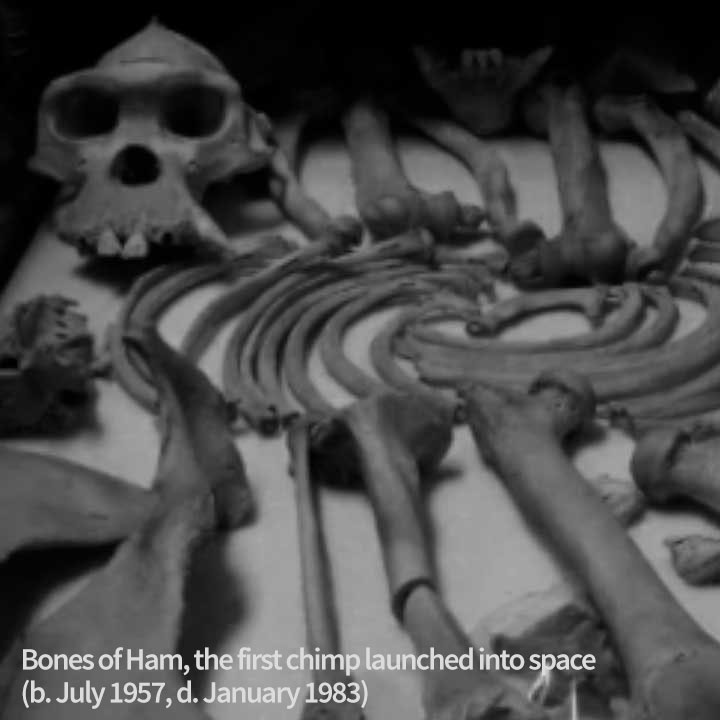
- 1961: Ham and Enos are used to test suborbital and space flight prior to Alan Shepard, Gus Grissom, and John Glenn's flights. Ham later dies alone in a zoo. Enos flew his space mission perfectly although he was shocked for performing correct actions due to a glitch in the equipment.
- 1970's: Chimpanzees are leased and sold to a variety of research institutions. Albany Medical Institute acquires Flo Chimpanzee (currently the eldest surviving chimp in Alamogordo) from a zoo in Memphis in 1972.
- 1980's: Dr. Frederick Coulston opens a private primate research lab a few miles away from Holloman Air Force Base. The federal government invests $10 million to build new housing for the growing population of chimpanzees in research in New Mexico.
- 1990's: The Coulston Foundation breeds chimps and takes ownership to captive chimps from labs who are getting out of the expensive, dangerous business of chimp research. Coulston receives chimps from New York University's Laboratory for Experimental Medicine and Research in Primates (LEMSIP) and reaches his goal to become the world's largest captive chimpanzee colony, with over 600 primates at two locations in Alamogordo. Numerous, egregious animal welfare, drug safety, and worker violations plague the lab, yet government support continues and chimps are used in research protocols involving insecticides, viruses, street drugs, and experimental surgical procedures.
-
1998: Dr. Carole Noon sues the United States Air Force for custody of former Air Force chimps, eventually 21 chimps are awarded to her Center for Captive Chimpanzee Care in 1999 (now known as Save the Chimps). Drs. Jane Goodall and Roger Fouts characterize The Coulston Foundation as having "the worst animal care record of any primate research facility in the history of the Animal Welfare Act."
- 1999: The Coulston Foundation settles formal US Department of Agriculture charges and an investigation into chimpanzee deaths by signing a Consent Decision and Order under which the lab agrees to: comply with federal animal welfare laws; maintain disease control and prevention programs, euthanasia programs and adequate veterinary care programs under supervision of a doctor of veterinary medicine; cease breeding chimpanzees; and divest of 300 chimpanzees by January 2, 2002. The USDA holds in abeyance a $100,000 fine, pending compliance with the order. Within four months, The Coulston Foundation violates the Order by breeding chimpanzees. The USDA never levies the fine.
-
November 9, 1999: Donna, a 36-year-old ex-Air Force chimpanzee, dies after carrying a dead fetus in her uterus for almost two months. During a belated C-section, The Coulston Foundation veterinarians remove a liter of pus from her abdomen and observe the dead fetus' skull poking through her torn uterus. Donna awakens from surgery and dies the next day.
- 2000: Association for Assessment and Accreditation of Laboratory Animal Care issues a report finding 100 percent turnover in veterinary staff at Coulston and blames inadequate veterinary care for the deaths of 17 chimpanzees over two years. The Coulston Foundation denies USDA inspectors access to visit and sells chimpanzees to animal trainers and zoos. In Defense of Animals testifies before the House Appropriations Subcommittee about the National Institutes of Health's malfeasance and continued illegal funding of The Coulston Foundation. Animal advocacy organizations promote plans to permanently retire 300 chimpanzees on Holloman Air Force Base.
- May 2000: The National Institutes of Health seizes 288 chimpanzees from The Coulston Foundation and holds these chimps at the Alamogordo Primate Facility (APF). An inventory states, "All of these animals have been reported to be either purposely or incidentally exposed/infected with various hepatitis viruses and/or HIV and need appropriate biocontainment and specialized veterinary care."
- December 2000: Congress passes the Chimpanzee Health Improvement, Maintenance, and Protection (CHIMP) Act, mandating creation of a publicly and privately financed sanctuary system to provide lifetime care for chimpanzees retired from federal biomedical research programs.
- 2001: NIH accepts the highest bid to manage the APF from Charles River Laboratories, a biomedical research giant. Animal Protection of New Mexico (APNM) works with New Mexico Senator Mary Jane Garcia and the state legislature to amend the state's felony animal cruelty law and remove the blanket exemption for research laboratories. The USDA issues a fourth set of formal charges against The Coulston Foundation, APNM sues the agency for not disclosing public records. Gina Chimpanzee dies locked outside in desert heat. The NIH cancels The Coulston Foundation's Animal Welfare Assurance, making the lab ineligible for further federal research funds.
-
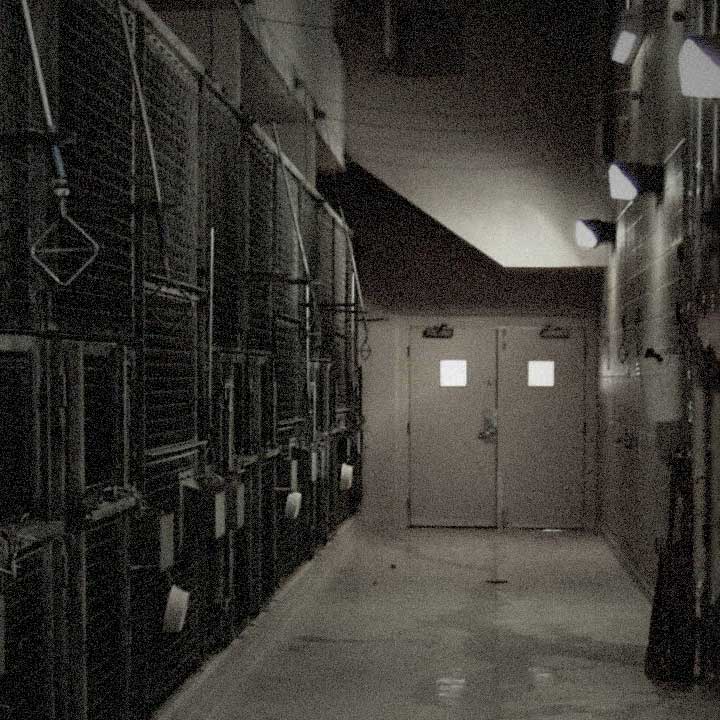
2002: The surviving 266 chimpanzees still owned by The Coulston Foundation are taken in by what will become the world's largest chimpanzee sanctuary, Save the Chimps. The NIH announces plans to build a federal chimpanzee sanctuary in Louisiana called Chimp Haven. Chimpanzees in sanctuary are provided with compassionate veterinary care, enrichment, and choice about their daily life. Chimpanzees who once self-mutilated and exhibited other signs of post-traumatic stress disorder in laboratory settings slowly show improvement. Save the Chimps begins transferring the chimps from the “dungeon” building built by Coulston to sanctuary in Florida.
-
• 2004: Otero County District Attorney Scot Key files criminal animal cruelty charges against Charles River Laboratories and director Dr. Rick Lee after the deaths of Rex and Ashley and the near-death of Topsy at the APF, following abandonment of these sick chimps to save veterinary costs. Charles River Laboratories successfully defends itself from charges using a loophole in the state statute, claiming the chimps were abandoned in the practice of veterinary medicine.
- 2008: APNM meets with Senator Jeff Bingaman to retire the surviving ~200 APF chimpanzees still in custody of the National Institutes of Health (NIH). The NIH responds that the chimps cannot be assessed to be moved to sanctuary as they have not been classified as retired. The NIH states it would be too cumbersome on the agency to provide information about the chimps' ages and health status.
- May 2010: Along with local business leaders, elected officials, and representatives from two Congressional offices, APNM tours the Alamogordo Primate Facility. Flo Chimpanzee spits water on the tour group after hearing a lab employee talk about the meticulous care animals receive in research laboratories. Senator Tom Udall writes to the NIH asking what their plans are for the Alamogordo Primate Facility.
- June 24, 2010: The NIH responds to Senator Udall that "there is unused space at other…facilities that could be used to house the APF chimpanzees" and states plans to close the facility and ship the surviving 202 chimpanzees to a lab for further invasive testing. Days later, 14 APF chimpanzees are shipped to a lab in Texas.
- July, August 2010: New Mexicans rally in support of the APF chimpanzees, calling Congress and U.S. Health and Human Services Secretary Kathleen Sebelius and submitting letters to the editor in support of retiring the chimps. Albuquerque Journal publishes editorial "Feds' Chimp Transfer a Lose-Lose-Lose Deal." Governor Bill Richardson writes to the NIH to retire the chimps. New Mexico in Focus covers the fate of the APF chimpanzees and what the NIH’s plans mean for the local economy.
-
September, October 2010: New York Times publishes "Will Aging Chimps Get to Retire, or Face Medical Research?" European Union bans research on great apes, Nature News publishes "Chimps' fate ignites debate", New Mexico legislators write to the NIH, Congressman Martin Heinrich writes to the NIH to retire the APF chimps.
-
November, December 2010: Congressmen Ben Ray Luján and Harry Teague ask the federal government to reconsider plans to ship the APF chimps to an out of state lab. KRWG airs "Chimpanzees of Alamogordo" contrasting Save the Chimps' treatment of former Coulston chimps with the federal government's treatment of the APF chimps. Governor Bill Richardson files a complaint with the U.S. Department of Agriculture to protect the APF chimps. APNM joins Governor Richardson and national advocacy organizations at DC press conference. Senators Tom Udall, Jeff Bingaman, and Tom Harkin request an independent review of the need for chimpanzees in research. Governor Richardson's office states it expects the review to take two years.
-
January, February 2011: Albuquerque Journal publishes editorial "NM Chimps Get a Reprieve; 800+ Need It", APNM appears on CNN's Issues with Jane Velez Mitchell. Animal Protection Voters again supports legislation to amend the state's animal cruelty statute that would remove the loophole used by Charles River Laboratories in 2004-2006. Citizens from across the state attend Animal Lobby Day at the Roundhouse in support of legislation for animals. The animal cruelty bill dies waiting to be heard in the Senate.
- March, April 2011: Congressman Heinrich and Luján sign on as original cosponsors of the Great Ape Protection and Cost Savings Act. McClatchy publishes special report "Chimps: Life in the Lab." The Institute of Medicine committee begins to take comments on their study “The Use of Chimpanzees in Biomedical and Behavioral Research”.
- May, June 2011: APNM meets with Congress regarding concerns about bias on the Institute of Medicine (IOM) chimp study. Eventually, three committee members are removed and bioethicist Jeffrey Kahn is appointed to chair. Nature editorializes "The purview of the task that the NIH has set the IOM is troubling. It contains no mention of ethical aspects of the research, and the NIH has publicly stated that this omission was deliberate. Of the 12 current members of the committee, just one is a bioethicist. The agency may wish to divorce the science from the ethics, but society at large will not accept such a distinction. Nor is it intellectually defensible…"
- July, August 2011: NIH Director Francis Collins advocates for a new National Center for Advancing Translational Sciences. He states, "The use of small and large animals to predict safety in humans is a long-standing but not always reliable practice in translational science," and also, “The use of animal models for therapeutic development and target validation is time consuming, costly, and may not accurately predict efficacy in humans.” APNM testifies at public hearings in DC before the Institute of Medicine's Committee on the Use of Chimpanzees in Biomedical and Behavioral Research. Dozens of scientists discuss the ethical problems of using chimps, the alternatives to using chimps, and the advances in technology that make using chimps irrelevant.
Fall 2011: Flo, eldest chimp at the APF, turns 54. Scientific American editorializes to "Ban Chimp Testing." Groundbreaking advocate Dr. Carole Noon and youth advocates from Moriarty are honored for their work for chimps at APNM's 2011 Milagro Awards. Wired publishes “NIH Accused of Dishonesty Over Chimp Research.” Albuquerque Journal publishes editorial “NIH Intent on Cruel, Worthless Chimp Tests.”
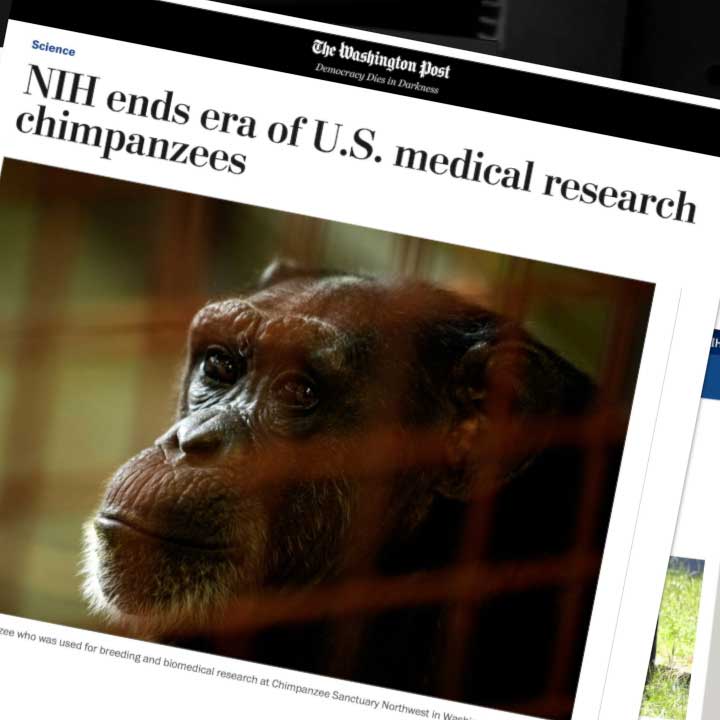
- December 2011: IOM Study finds most biomedical research on chimpanzees is unnecessary. Kennedy Institute of Ethics calls for chimpanzees to be given same protections as other vulnerable groups. New Mexico Senators Udall and Bingaman write to the NIH urging prompt adoption of IOM report recommendations. NIH announces suspension of funding for further research with chimpanzees.
......
|
|